Highland cow fun facts (from a farm that's obsessed).
The bangs, the horns, the fluff. Here's what makes Highland cattle so special, with help from the shaggy crew on our Western New York farm.
Hey, neighbor.
If you follow us online, you already know we have a serious Highland cow problem. (It's not really a problem. We just can't stop.) People ask us about them all the time, so we rounded up our favorite Highland cow facts in one place.
Some of these facts surprised even us. Others explain exactly why Highlands do so well here, where winter means deep snow, biting wind, and months of cold. Turns out a cow built for the Scottish Highlands feels right at home in Western New York.
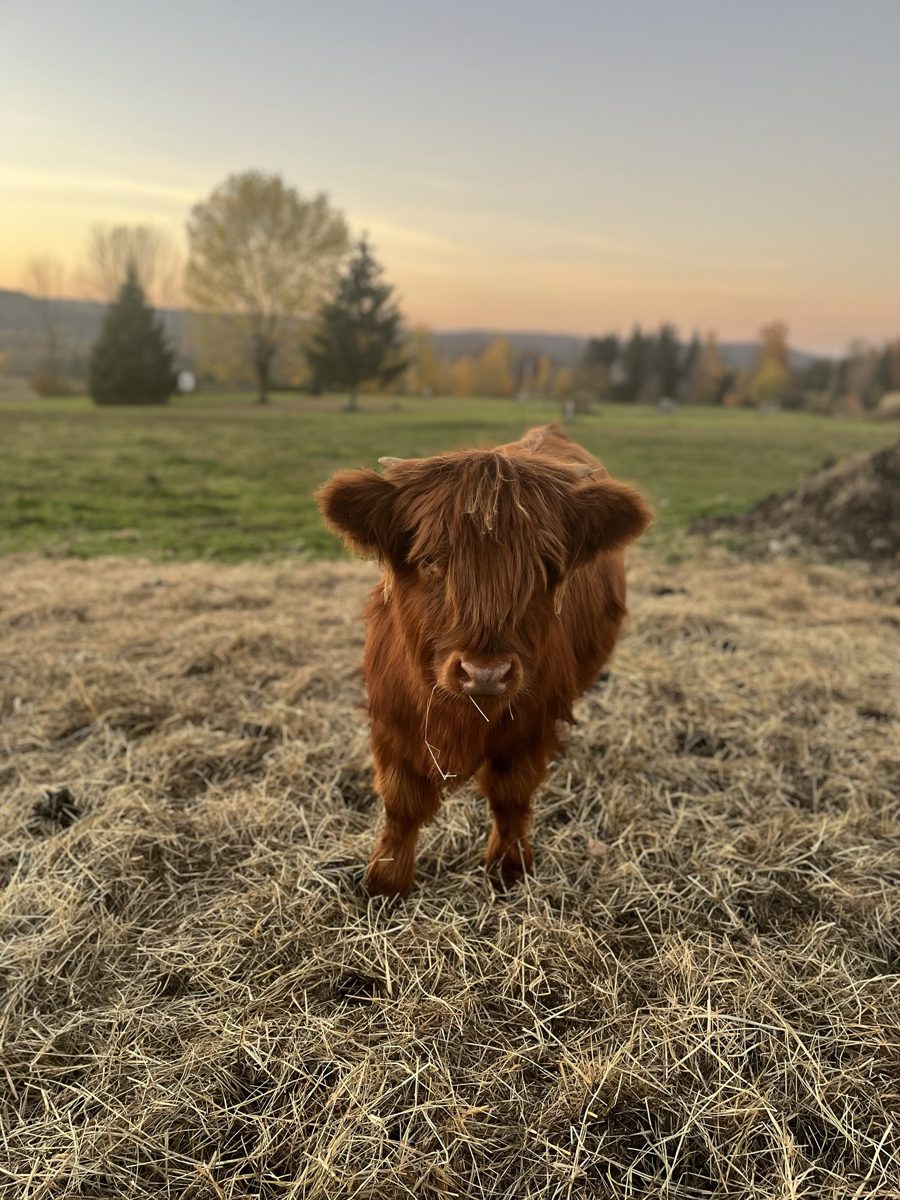
Our favorite Highland cow facts
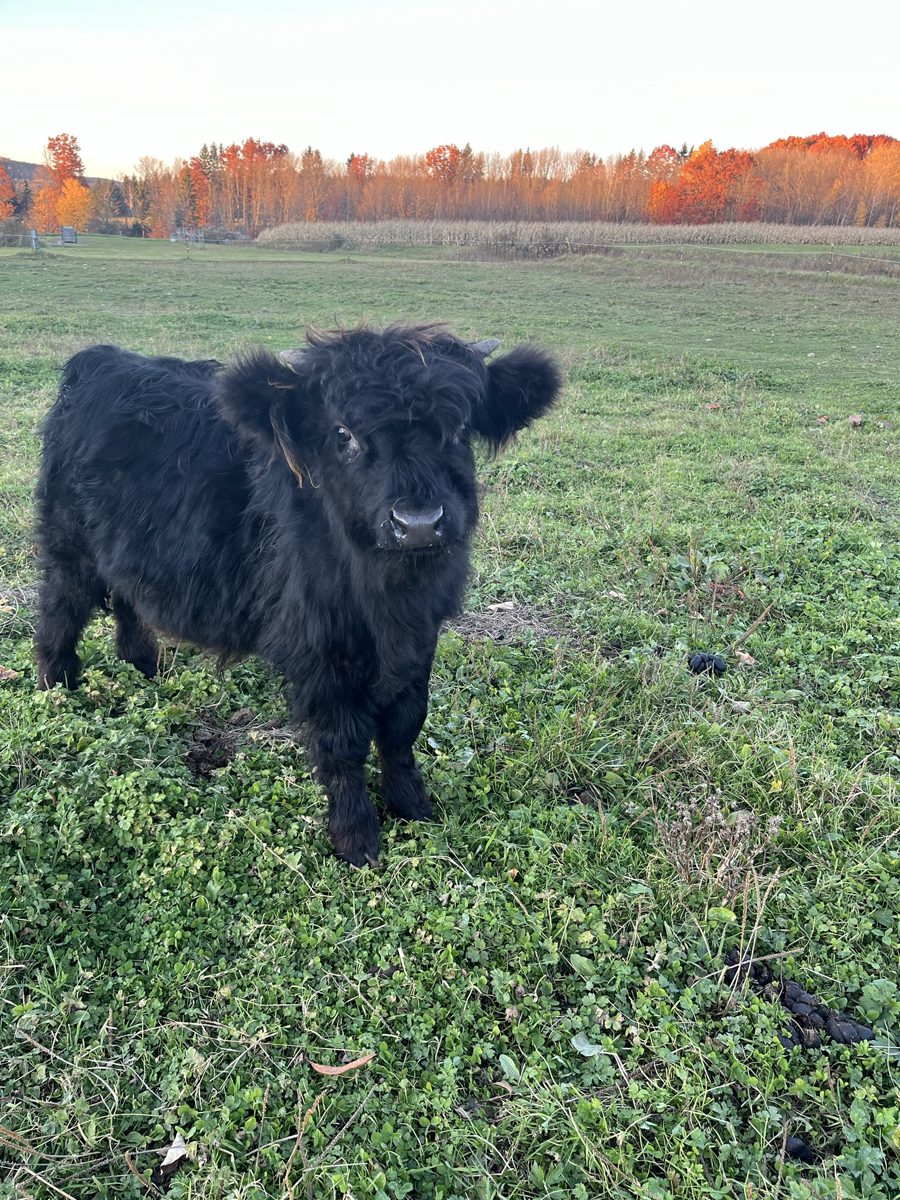
1. They come from Scotland
Highland cattle come from the Scottish Highlands and the Outer Hebrides, where it's cold, wet, and windy. Sound familiar, Western New York?
2. They wear two coats
Highlands have a double coat: a long, oily outer layer that sheds rain and snow, plus a soft, downy undercoat. Their outer hair is the longest of any cattle breed.
3. They're insulated by hair, not fat
Because their coat keeps them warm, Highlands don't need a thick layer of body fat. That's one reason Highland beef is known for being lean.
4. The bangs have a job
That famous forelock isn't just for looks. Along with their long eyelashes, it helps protect their eyes from weather and flies, so eye problems like pinkeye are less common.
5. Girls have horns too
Both cows and bulls grow horns. They're long and wide, and they help with everything from scratching an itch to digging through snow for grass.
6. They come in lots of colors
Red is the most common color, but Highlands also come in yellow, black, silver, white, dun, and brindle. Our crew covers a few of these shades.
7. A group is called a "fold"
Not a herd! The name comes from the open stone shelters, called folds, where Highlands were kept on winter nights in Scotland.
8. Snow doesn't bother them
Highlands are one of the most cold-hardy cattle breeds around, and they're raised as far north as Alaska and Scandinavia. Ours happily stand in the snow while we're bundled in three layers.
9. Heat is a different story
All that fluff makes Highlands less tolerant of hot weather, so shade and fresh water are a must in summer.
10. They're easygoing (and smart)
Highlands are known for being even-tempered and intelligent. They're also good foragers that will happily eat brush other cattle pass up.
Bonus fact: Queen Elizabeth II started a fold of Highland cattle at Balmoral Castle in 1954. Shaggy cows have friends in high places.
The Highlands on our farm
Our Highland story started with Wilma, our very first cow, a Hereford x Highland. After her, we were hooked.
Richard
Our mini Highland bull and one of our first full Highlands. We offer his stud services to local farms looking for small Highland genetics.
Maggie
Our mama cow, a Highland cross, and a big part of why our fold keeps growing.
Ethel
Our newest arrival: a mini Highland heifer calf. No photos yet. She's still deciding on her good side.
Marvin
Our Highland cross steer, and the apple of Kalvary's eye. Our mini donkey has adored him since the day he was born.
Wanda
Another Highland cross in our shaggy crew, with the fluff to prove it.
Like all of our animals, our Highlands are super friendly once they're trained. Petting zoo quality, as we like to say, with a side of attitude.
Highland cow FAQs
Why do Highland cows have long hair?
They come from the cold, wet Scottish Highlands. Their double coat, a long oily outer layer over a soft undercoat, keeps them warm and dry without a thick layer of body fat.
Do female Highland cows have horns?
Yes! Both cows and bulls have long, wide horns.
Are Highland cows friendly?
Highlands are known for being calm and even-tempered, and ours are very friendly. Like any cattle, though, they're big, strong animals with horns, so always respect their space.
Do you offer Highland genetics or stud service?
Yes. Richard, our mini Highland bull, is available for stud service to local farms. Message us on Facebook to ask about details.
Get your daily dose of fluff.
We post our Highlands (and the rest of the crew) almost every day. Expect bangs blowing in the wind, snow-covered backs, and the occasional dramatic hay moment.
Join our farm list for news from our Western New York Highland cattle farm and farm tour updates. Tours by appointment start in 2027.
Join the farm listRead how it all started in our story, or meet the donkeys in donkey vs. mule.
← Back to all posts