Raising heritage turkeys for Thanksgiving.
What makes a heritage turkey different, how we raise ours here in Western New York, and how to grab one of the last few for your table.
Heritage turkeys for Thanksgiving
- Heritage breed turkeys
- Raised on pasture with turkey feed
- No antibiotics, no added hormones*
- Processed and ready for your oven
Call or text us at 716-378-0408 to reserve yours, or message us on Facebook. Once they're gone, they're gone until next year.
*Federal regulations prohibit the use of hormones in poultry.
Hey, neighbor.
Thanksgiving is almost here, and this year a few of our heritage Thanksgiving turkeys are ready to head to new tables. If you've ever wondered where your holiday bird comes from, or what "heritage" even means on a turkey, pull up a chair.
Raising animals for food is a big part of why we farm. We want folks to know where their food comes from, and there's no better time to talk about it than the week everyone gathers around a turkey.
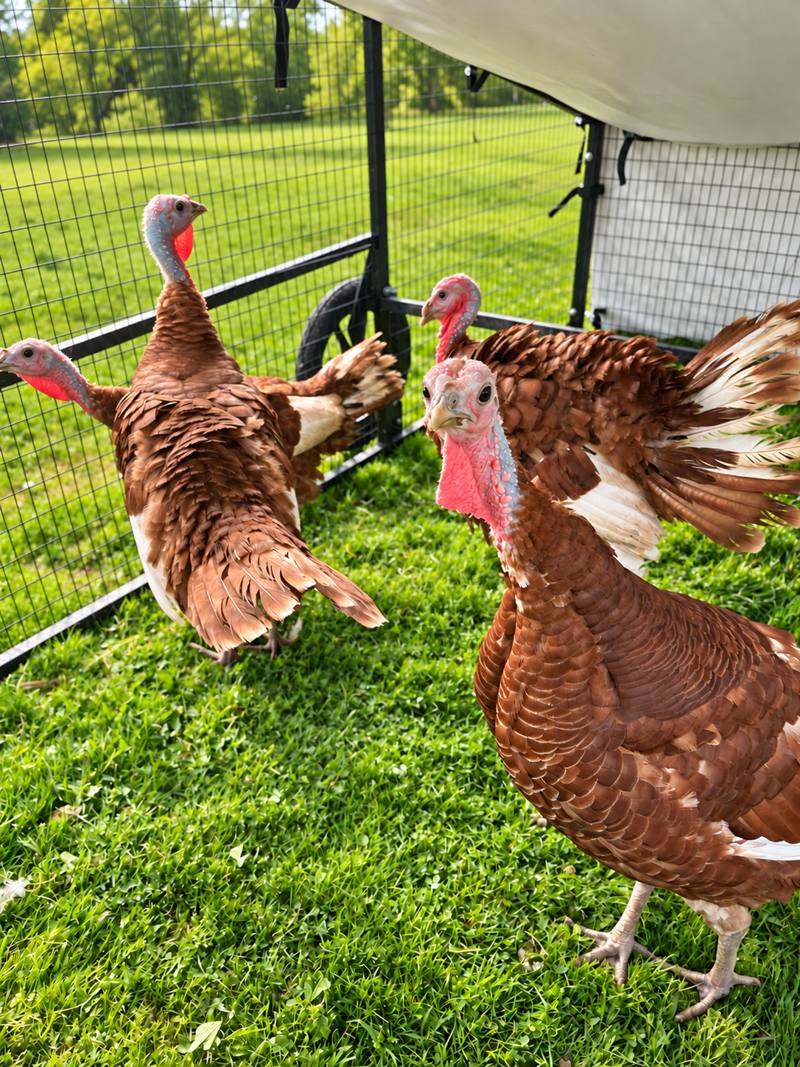
What makes a turkey "heritage"?
"Heritage" isn't just a fancy label. According to The Livestock Conservancy, a true heritage turkey has to check three boxes:
1. Natural mating
Heritage turkeys reproduce on their own, the old-fashioned way. Most commercial turkeys can't.
2. A long outdoor life
They're built to live and thrive outdoors, with breeding hens productive for years.
3. Slow growth
Heritage turkeys take about 28 weeks to reach market weight. That's a lot of months of care before Thanksgiving.
Most grocery store turkeys are Broad Breasted Whites. They're bred to grow fast and put on a lot of breast meat, so fast that they can't mate naturally anymore. Heritage birds are closer to what turkeys looked like generations ago.
How we raise our heritage Thanksgiving turkeys
Our turkeys are raised on pasture, where they get to be turkeys: walking, scratching, and foraging out on the grass. Along with what they find on pasture, they're fed a turkey feed to make sure they get the nutrition they need.
We don't use antibiotics on this flock, and like all poultry in the U.S., they're raised without added hormones.
Raising heritage birds takes patience. They grow slowly, they need space, and they need care every single day, through Western New York rain, heat, and the first snow. That's a big part of why heritage turkeys cost more than a grocery store bird, and why there are only a handful available.
Heritage turkey vs. grocery store turkey
| Heritage | Typical grocery store | |
|---|---|---|
| Breed | Heritage breeds | Usually Broad Breasted White |
| Mating | Natural | Artificial insemination |
| Time to market weight | About 28 weeks | Much faster |
| Shape | Leaner, with a smaller breast and more balance between white and dark meat | Very large breast |
| Ours are raised | On pasture, here in WNY | Varies |
Tips for cooking a heritage turkey
A heritage bird is built differently than a supermarket turkey, so it's worth cooking with a little extra attention.
Use a thermometer
Don't go by time alone. The USDA says turkey is safe when it reaches 165°F in the thickest part of the breast, thigh, and wing.
Check it early
Heritage birds are often leaner and shaped differently, so start checking the temperature before the recipe says it's done.
Let it rest
Give the bird time to rest before carving so the juices stay in the meat.
Heritage turkey FAQs
Do you still have Thanksgiving turkeys for sale?
We have a handful left. Call or text us at 716-378-0408 to reserve one before they're gone.
What is a heritage turkey?
A turkey that mates naturally, can live a long, productive life outdoors, and grows slowly, reaching market weight in about 28 weeks.
Are your turkeys raised with hormones or antibiotics?
No. We don't use antibiotics on this flock, and federal regulations prohibit the use of hormones in poultry.
Are your turkeys sold live or processed?
Processed, so they're ready for your Thanksgiving oven.
Bring a farm-raised bird home.
Only a handful of our heritage turkeys are left this year. Call or text 716-378-0408 to reserve yours.
Want first dibs next year? Join the farm list for news on turkeys and everything else coming from our Western New York farm.
Join the farm listGetting the flock ready for the cold? Read how we're preparing chickens for winter.
← Back to all posts